ShareMaster V2 is in beta, a complete rebuild. See what is new and request access →
ShareMaster V2

SharePoint to Azure Blob with the dates and authors intact

Copy SharePoint libraries, folders or single files into an Azure Blob container in your own subscription. The folder tree comes with them, each blob records who created it and when, and the same app copies it back into SharePoint when you need it again.

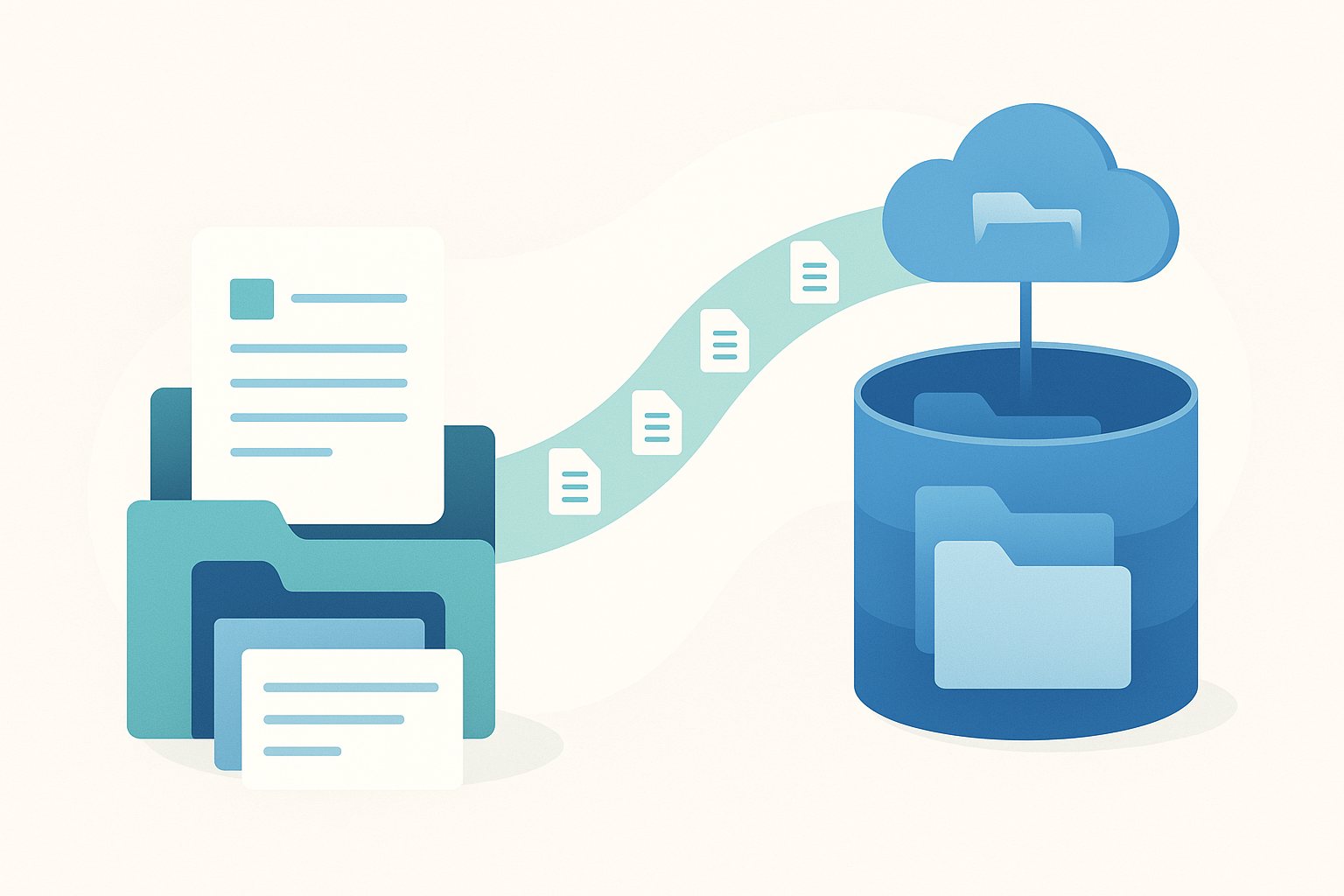
Documents and folders flowing from a SharePoint library into an Azure Blob Storage container

Where this is up to. SharePoint to Azure Blob is in the ShareMaster V2 beta, which you download from the members area with any ShareMaster account. It runs with a Clone Master or Archive Master licence, or a trial.

How it works

Two sign-ins, one pick, then it copies

No AzCopy scripts and no download to a local drive in between. It runs on your Windows machine and reads from SharePoint and writes to the container itself.

Sign in to SharePoint

The tenant you are copying from. The copy reads as you, so it reaches exactly what you can already open.

Connect the container

A SAS URL, a connection string or your own app registration. A container you have used before is one click.

Pick what to copy

Tick whole sites, or open one and tick any mix of libraries, folders and files. On the right, open the folder in the container that everything should go under.

Run it

Files already in the container are skipped unless you choose to overwrite them. Progress is shown per file, and the run is recorded in history.

Be clear before you start

What comes across, and what does not

A SharePoint file carries far more than a blob can hold. Here is exactly what makes the trip and what stays behind.

Comes across

  • The files you pick, with the folder structure they sit in
  • Created and modified dates from SharePoint, stored as metadata on each blob
  • Created By and Modified By, as names and, where SharePoint gave one, the email address behind them
  • The web address each file came from, so you can always trace a blob back
  • Empty folders, as zero-byte folder markers, so the shape of the tree survives
  • Each picked library or folder in its own folder in the container, so two libraries that both hold a Report.docx never collide

Does not

  • Version history. Only the current version of each file is copied
  • Column values, content types and item permissions. A blob has nowhere to hold them
  • Lists. This copies files from document libraries, not list items
  • Anything removed from SharePoint. The copy only reads, and freeing space is a separate job for Archive Master
  • Resuming from the history list. Run the same selection again instead, and files already in the container are skipped
Why it is built this way

A copy you can actually bring back

It copies back, too

Azure Blob to SharePoint is the same screen in reverse. It imports through Microsoft's SharePoint Migration API, rebuilds the folder tree in the library you pick, and restores the created and modified dates each blob recorded on the way out.

Authors are matched, not guessed

On the way back, an author is restored only when the recorded email address belongs to a real user on the destination tenant. A name on its own is never turned into an author. Anyone who cannot be matched is named on the run screen, so you can add them and run again.

Nothing is overwritten by accident

Files already in the container are skipped by default. Overwriting is one checkbox, and it is off until you tick it.

Any subscription, any tenant

The storage account does not have to live beside the SharePoint tenant. Point it at a subscription in another directory, or at a partner's storage account, with a SAS URL.

See inside the container first

The destination pane lists what is already in the folder you are copying into, and the Blob Viewer lets you browse the whole container without copying anything.

Want the space back as well?

This copy leaves SharePoint untouched. To move cold files out and free the storage, Archive Master copies them to your Blob Storage and leaves a working link in the library that downloads or restores the original.

FAQ

SharePoint to Azure Blob, common questions

How do I copy SharePoint files to Azure Blob Storage?
Sign in to SharePoint inside ShareMaster, then connect the Azure Blob container you want to write to. Tick the sites, libraries, folders or individual files on the left, open the folder in the container you want them under on the right, and start the copy. Each file is read from SharePoint and written as a blob, with per-file progress while it runs.
How does ShareMaster connect to my storage account?
With a container SAS URL, a storage account connection string, or an app registration of your own with a client secret. The account doing the writing needs write access: a SAS needs write and list permissions, and an app registration needs the Storage Blob Data Contributor role. You can save a container so the next run does not ask again, and the secret is only stored if you choose to save it.
Can the container be in a different tenant from SharePoint?
Yes. The SharePoint sign-in and the container connection are separate, so the storage account can sit in any subscription you can reach, including one in a different Microsoft Entra tenant from the sites you are copying.
What is stored with each blob?
The file's contents, plus metadata recording its SharePoint created and modified dates, who created and last modified it (name and email address where SharePoint gave one), and the web address it came from. That metadata is what lets a later copy back into SharePoint put the dates and authors back.
Do version history, columns and permissions come across?
No. A blob is a file with a small set of metadata values. It has nowhere to hold a SharePoint version history, custom column values or item permissions, so only the current version of each file is copied, together with the dates, authors and source address above.
Does it delete anything from SharePoint?
No. SharePoint is only read. If the goal is to free up SharePoint storage by moving cold files out, that is Archive Master, which copies files to your own Blob Storage and leaves a working link in their place in the library.
What happens to files that are already in the container?
They are skipped unless you tick Overwrite existing blobs. Because of that, running the same selection again after an interrupted copy only writes what is not there yet.
Can I copy content from Azure Blob back into SharePoint?
Yes, as a separate run in the other direction. It imports through Microsoft's SharePoint Migration API, rebuilds the folder tree in the library you pick, and restores the recorded dates. Authors are restored where the recorded email address matches a user on the destination tenant. Any that do not match are named on the run screen, and those files are created by the account running the import rather than credited to a guess.
Which licence includes it?
SharePoint to Azure Blob is included with Clone Master and Archive Master. Azure Blob to SharePoint is included with Clone Master. The 14-day trial reaches both.

Copy SharePoint into storage you own

14-day free trial. No credit card. It runs on your machine, and your content never passes through us.