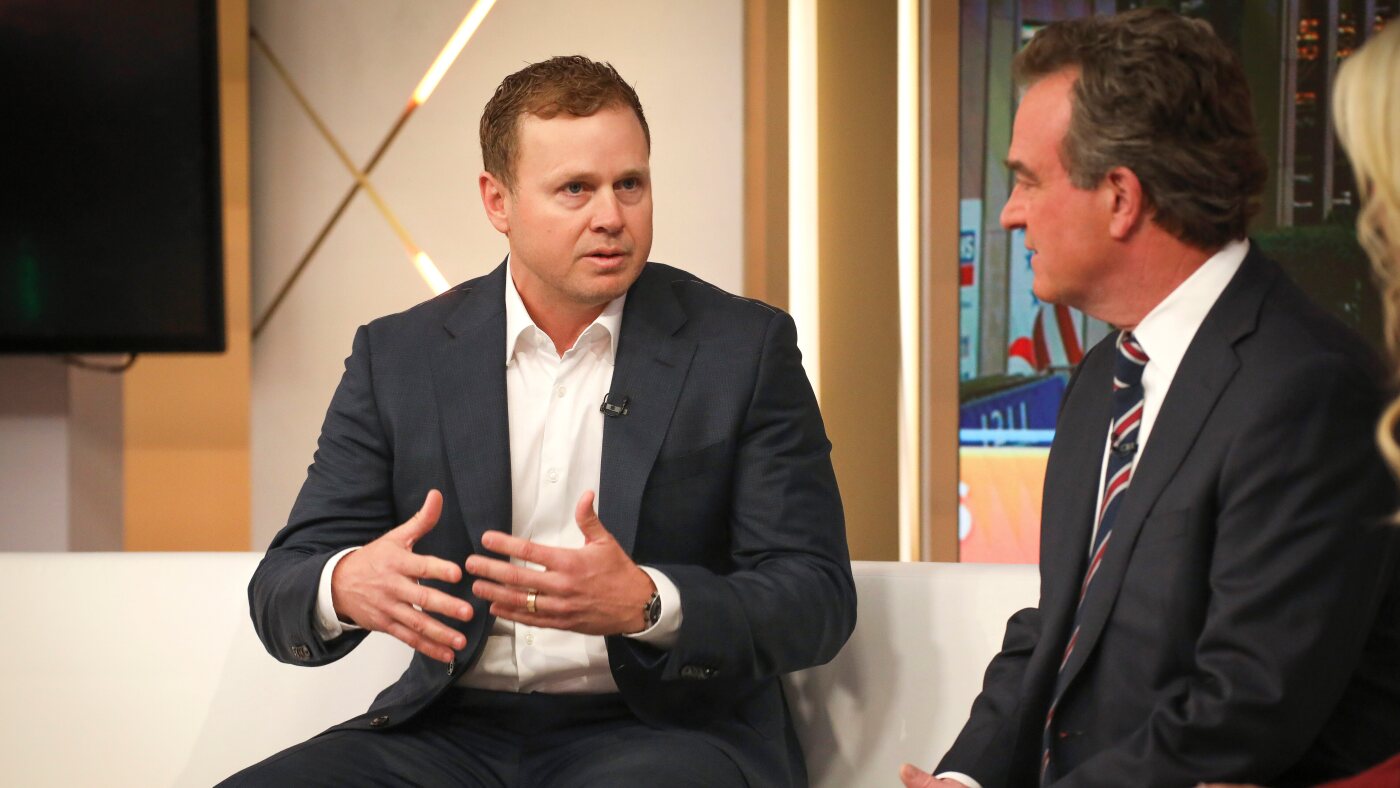
decision insights The platform tracks financial markets with attention to earnings results, valuation changes, and investor sentiment. Spencer Pratt, a former reality television personality, is employing an aggressive social media strategy—featuring edgy humor, AI-generated content, and combative rhetoric—to build momentum for a potential Los Angeles mayoral bid. Political experts suggest this approach may represent the future of online campaigning, offering a glimpse into how digital engagement could reshape political marketing and related industries.
Live News
decision insights Real-time data enables better timing for trades. Whether entering or exiting a position, having immediate information can reduce slippage and improve overall performance. Spencer Pratt, best known for his role on the reality series “The Hills,” has shifted his focus to a possible run for mayor of Los Angeles. According to a report by NPR, Pratt is “flooding social media” with a mix of edgy humor, AI-generated “slop,” and combative rhetoric as a deliberate strategy to capture attention and appeal to highly online voters. This method, which some political experts describe as “winning the internet,” could signal a new era in political campaigning. The approach leans heavily on viral content and controversial statements, designed to maximize engagement across platforms like X (formerly Twitter) and TikTok. Pratt’s tactics are not traditional; instead of policy-focused messaging, he relies on meme culture and provocative posts to build a digital following. Political analysts quoted in the NPR story note that this style may become more common as candidates seek to break through the noise of a crowded information environment. The use of AI-generated content—often referred to colloquially as “AI slop”—adds an element of novelty and low-cost production, potentially lowering barriers for entry into political races.
Spencer Pratt’s Online Campaign Strategy: A Case Study in Digital Political Marketing and Its Potential Market ImplicationsReal-time tracking of futures markets often serves as an early indicator for equities. Futures prices typically adjust rapidly to news, providing traders with clues about potential moves in the underlying stocks or indices.Incorporating sentiment analysis complements traditional technical indicators. Social media trends, news sentiment, and forum discussions provide additional layers of insight into market psychology. When combined with real-time pricing data, these indicators can highlight emerging trends before they manifest in broader markets.Observing how global markets interact can provide valuable insights into local trends. Movements in one region often influence sentiment and liquidity in others.Real-time updates are particularly valuable during periods of high volatility. They allow traders to adjust strategies quickly as new information becomes available.Effective risk management is a cornerstone of sustainable investing. Professionals emphasize the importance of clearly defined stop-loss levels, portfolio diversification, and scenario planning. By integrating quantitative analysis with qualitative judgment, investors can limit downside exposure while positioning themselves for potential upside.Data visualization improves comprehension of complex relationships. Heatmaps, graphs, and charts help identify trends that might be hidden in raw numbers.
Key Highlights
decision insights Investors increasingly view data as a supplement to intuition rather than a replacement. While analytics offer insights, experience and judgment often determine how that information is applied in real-world trading. - Key takeaway: Pratt’s campaign illustrates a shift toward “personality-driven” online politics, where engagement metrics may outweigh traditional policy platforms. - Market implication: Social media companies could see increased usage during election cycles if such strategies prove effective, potentially boosting advertising revenue and user retention. - Sector impact: Political consulting firms and digital marketing agencies may need to adapt to demand for unconventional, viral-first campaign tactics, possibly creating new service offerings centered on AI content generation. - Risk consideration: The combative and controversial nature of this approach could lead to platform moderation challenges, affecting content policies and shareholder sentiment for social media firms. - Investor angle: Companies that provide AI tools for content creation (e.g., generative text and image platforms) might benefit from increased adoption in political advertising, though regulatory risks remain.
Spencer Pratt’s Online Campaign Strategy: A Case Study in Digital Political Marketing and Its Potential Market ImplicationsReal-time tracking of futures markets can provide early signals for equity movements. Since futures often react quickly to news, they serve as a leading indicator in many cases.Timing is often a differentiator between successful and unsuccessful investment outcomes. Professionals emphasize precise entry and exit points based on data-driven analysis, risk-adjusted positioning, and alignment with broader economic cycles, rather than relying on intuition alone.While data access has improved, interpretation remains crucial. Traders may observe similar metrics but draw different conclusions depending on their strategy, risk tolerance, and market experience. Developing analytical skills is as important as having access to data.Correlating futures data with spot market activity provides early signals for potential price movements. Futures markets often incorporate forward-looking expectations, offering actionable insights for equities, commodities, and indices. Experts monitor these signals closely to identify profitable entry points.Real-time data also aids in risk management. Investors can set thresholds or stop-loss orders more effectively with timely information.Observing correlations between markets can reveal hidden opportunities. For example, energy price shifts may precede changes in industrial equities, providing actionable insight.
Expert Insights
decision insights The interpretation of data often depends on experience. New investors may focus on different signals compared to seasoned traders. From an investment perspective, Pratt’s strategy highlights a potential evolution in how political candidates allocate resources. Traditional media spending—TV ads, direct mail—may continue to decline relative to digital engagement, particularly among younger demographics. If this model gains traction, firms offering targeted social media advertising, analytics, and AI content production could see increased demand. However, cautious language is warranted. The effectiveness of such a campaign in securing an actual mayoral victory remains uncertain. While Pratt may be “winning the internet,” translating online popularity into real-world votes is a different challenge. Political experts cited in the source note that this style is still experimental, and its long-term viability has not been proven. Investors in social media platforms or digital advertising should monitor whether regulatory bodies introduce new rules around AI-generated political content, which could alter the landscape. Moreover, the combative rhetoric carries reputational risk for both the candidate and the platforms that host such content. Any backlash could lead to advertiser pullbacks or increased content moderation costs. As the 2024 election cycle approaches, this case may offer early indicators of how digital-first campaigns evolve—but it is too early to draw definitive conclusions about market impact. Disclaimer: This analysis is for informational purposes only and does not constitute investment advice.
Spencer Pratt’s Online Campaign Strategy: A Case Study in Digital Political Marketing and Its Potential Market ImplicationsEconomic policy announcements often catalyze market reactions. Interest rate decisions, fiscal policy updates, and trade negotiations influence investor behavior, requiring real-time attention and responsive adjustments in strategy.Some investors rely heavily on automated tools and alerts to capture market opportunities. While technology can help speed up responses, human judgment remains necessary. Reviewing signals critically and considering broader market conditions helps prevent overreactions to minor fluctuations.Understanding liquidity is crucial for timing trades effectively. Thinly traded markets can be more volatile and susceptible to large swings. Being aware of market depth, volume trends, and the behavior of large institutional players helps traders plan entries and exits more efficiently.Investors who keep detailed records of past trades often gain an edge over those who do not. Reviewing successes and failures allows them to identify patterns in decision-making, understand what strategies work best under certain conditions, and refine their approach over time.Monitoring derivatives activity provides early indications of market sentiment. Options and futures positioning often reflect expectations that are not yet evident in spot markets, offering a leading indicator for informed traders.Investors these days increasingly rely on real-time updates to understand market dynamics. By monitoring global indices and commodity prices simultaneously, they can capture short-term movements more effectively. Combining this with historical trends allows for a more balanced perspective on potential risks and opportunities.