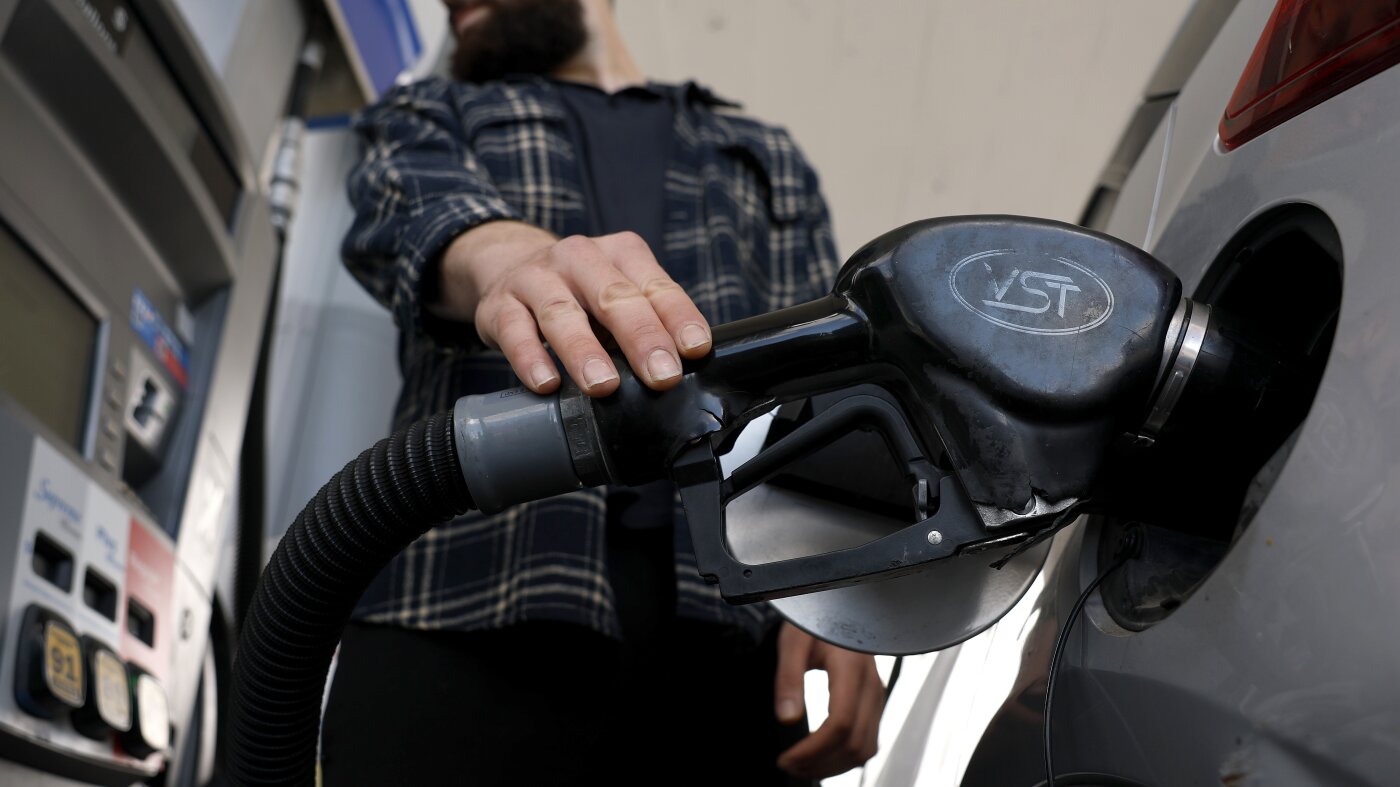
Gas Price Impact Consumer Spending - is connected to investor sentiment, confidence, and risk appetite shifts across global financial markets. With the national average gasoline price reaching $4.55 per gallon ahead of one of the busiest travel weekends of the year, consumers are exploring ways to reduce fuel costs. Strategies range from driving slower and considering electric vehicles to simply reducing travel, reflecting broader inflation pressures on household budgets.
Live News
Gas Price Impact Consumer Spending - is connected to investor sentiment, confidence, and risk appetite shifts across global financial markets. Market participants often combine qualitative and quantitative inputs. This hybrid approach enhances decision confidence. As the United States enters a peak travel period, the national average price for a gallon of regular gasoline has climbed to $4.55, according to data from the source. This price level, recorded just before one of the busiest travel weekends of the year, has prompted consumers to evaluate options for cutting fuel expenses. Common approaches highlighted in the report include modifying driving habits such as reducing speed, which may improve fuel efficiency. Another option is transitioning to electric vehicles, though this involves higher upfront costs and infrastructure considerations. Some consumers may choose to limit or cancel travel altogether. These behaviors reflect a direct response to elevated pump prices, which have become a focal point for household budgeting amid broader inflationary trends. The source notes that these strategies are not mutually exclusive, and many drivers may combine tactics to manage costs. The $4.55 figure serves as a benchmark for the current cost environment, though actual prices can vary by region and fuel type. The report does not provide specific technical data or projections for future price movements.
Rising Gas Prices Drive Consumer Behavior Shifts Ahead of Peak Travel Season Some investors focus on macroeconomic indicators alongside market data. Factors such as interest rates, inflation, and commodity prices often play a role in shaping broader trends.Cross-asset analysis helps identify hidden opportunities. Traders can capitalize on relationships between commodities, equities, and currencies.Rising Gas Prices Drive Consumer Behavior Shifts Ahead of Peak Travel Season Market anomalies can present strategic opportunities. Experts study unusual pricing behavior, divergences between correlated assets, and sudden shifts in liquidity to identify actionable trades with favorable risk-reward profiles.Cross-asset analysis can guide hedging strategies. Understanding inter-market relationships mitigates risk exposure.
Key Highlights
Gas Price Impact Consumer Spending - is connected to investor sentiment, confidence, and risk appetite shifts across global financial markets. Monitoring commodity prices can provide insight into sector performance. For example, changes in energy costs may impact industrial companies. Key takeaways from the situation center on consumer spending patterns and energy market dynamics. The $4.55 per gallon average suggests that fuel costs remain a significant factor in household budgets, particularly during high-travel periods. This could influence discretionary spending on other goods and services, as consumers allocate more funds to transportation. From a sector perspective, elevated gasoline prices may support revenues for oil and gas producers, while potentially dampening demand for travel-related industries such as airlines and hospitality. The shift toward fuel-saving behaviors might also accelerate interest in energy-efficient vehicles, though adoption rates depend on factors like vehicle availability, charging infrastructure, and electricity costs. The report does not quantify these effects but observes the trend as a market reaction to current price levels. Additionally, the timing of the price spike around a major travel weekend highlights the seasonal vulnerability of consumers to supply and demand imbalances in fuel markets. No explicit policy or corporate responses are mentioned in the source.
Rising Gas Prices Drive Consumer Behavior Shifts Ahead of Peak Travel Season Access to continuous data feeds allows investors to react more efficiently to sudden changes. In fast-moving environments, even small delays in information can significantly impact decision-making.Structured analytical approaches improve consistency. By combining historical trends, real-time updates, and predictive models, investors gain a comprehensive perspective.Rising Gas Prices Drive Consumer Behavior Shifts Ahead of Peak Travel Season Real-time updates are particularly valuable during periods of high volatility. They allow traders to adjust strategies quickly as new information becomes available.Investors often evaluate data within the context of their own strategy. The same information may lead to different conclusions depending on individual goals.
Expert Insights
Gas Price Impact Consumer Spending - is connected to investor sentiment, confidence, and risk appetite shifts across global financial markets. Many traders monitor multiple asset classes simultaneously, including equities, commodities, and currencies. This broader perspective helps them identify correlations that may influence price action across different markets. From an investment perspective, elevated gasoline prices could influence several sectors. Energy companies may see continued revenue support if prices remain near current levels, but volatility in crude oil markets and potential demand shifts pose risks. Consumers' cost-saving measures might reduce fuel demand growth over time, potentially capping further price increases. The push toward electric vehicles, while not yet dominant, could represent a longer-term structural shift that investors monitor. However, near-term adoption likely hinges on factors like battery costs, government incentives, and charging network expansion. The source does not provide financial forecasts or stock-specific guidance. Broader implications include potential pressure on consumer spending and inflation metrics. If high gas prices persist, they could weigh on economic growth by reducing disposable income. Investors may consider these factors when evaluating exposure to consumer discretionary, energy, and transportation sectors. As always, market conditions are subject to change based on geopolitical events, supply disruptions, and policy adjustments. Disclaimer: This analysis is for informational purposes only and does not constitute investment advice.
Rising Gas Prices Drive Consumer Behavior Shifts Ahead of Peak Travel Season Diversifying data sources can help reduce bias in analysis. Relying on a single perspective may lead to incomplete or misleading conclusions.Monitoring investor behavior, sentiment indicators, and institutional positioning provides a more comprehensive understanding of market dynamics. Professionals use these insights to anticipate moves, adjust strategies, and optimize risk-adjusted returns effectively.Rising Gas Prices Drive Consumer Behavior Shifts Ahead of Peak Travel Season Many investors underestimate the psychological component of trading. Emotional reactions to gains and losses can cloud judgment, leading to impulsive decisions. Developing discipline, patience, and a systematic approach is often what separates consistently successful traders from the rest.Seasonality can play a role in market trends, as certain periods of the year often exhibit predictable behaviors. Recognizing these patterns allows investors to anticipate potential opportunities and avoid surprises, particularly in commodity and retail-related markets.